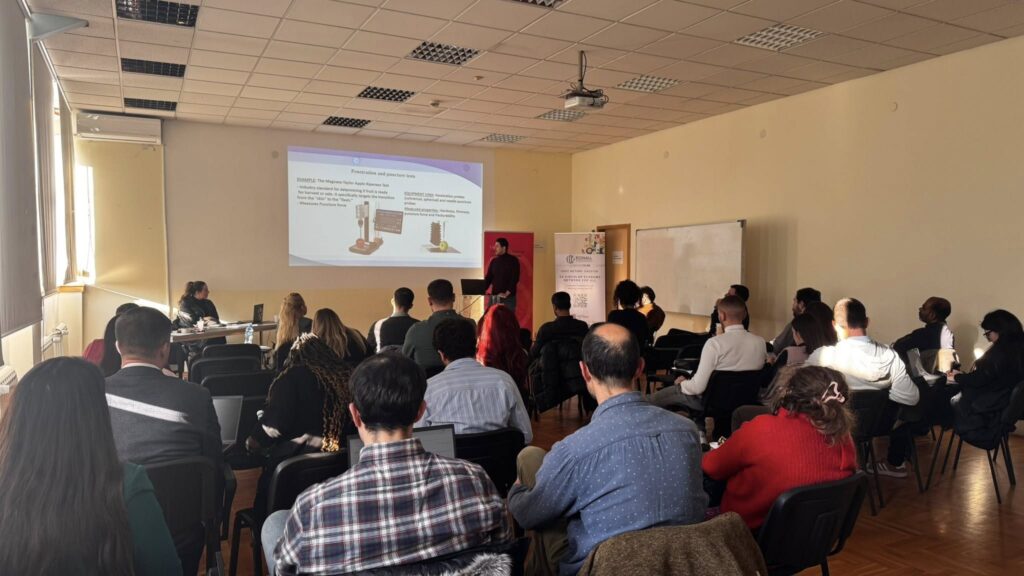
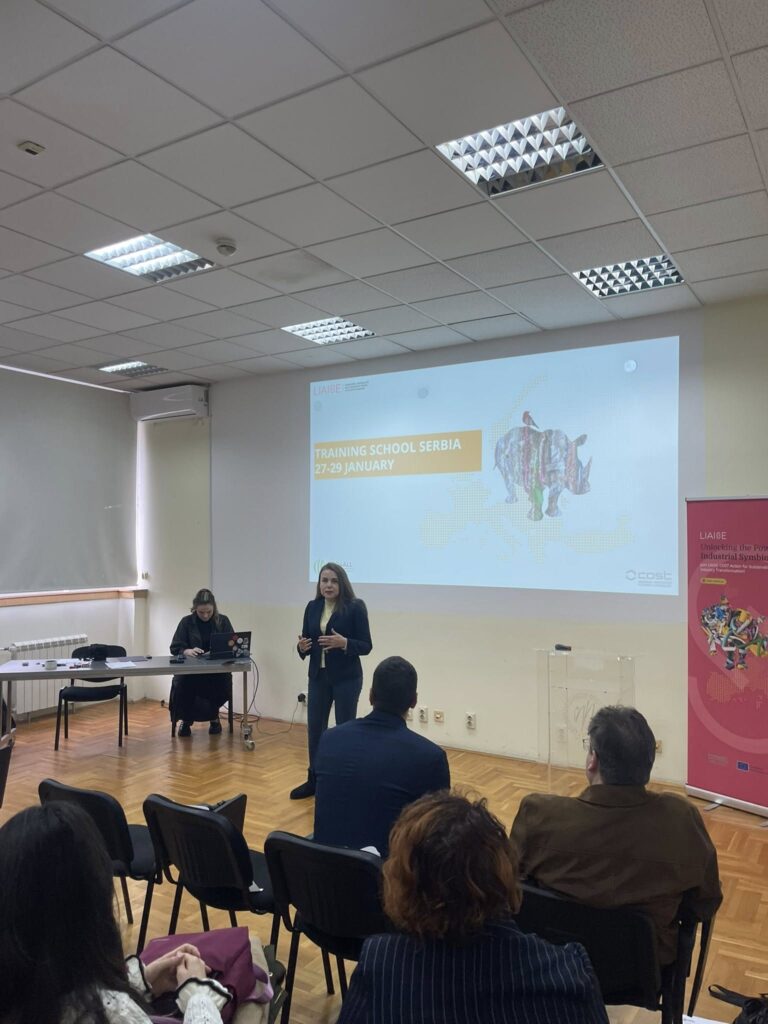
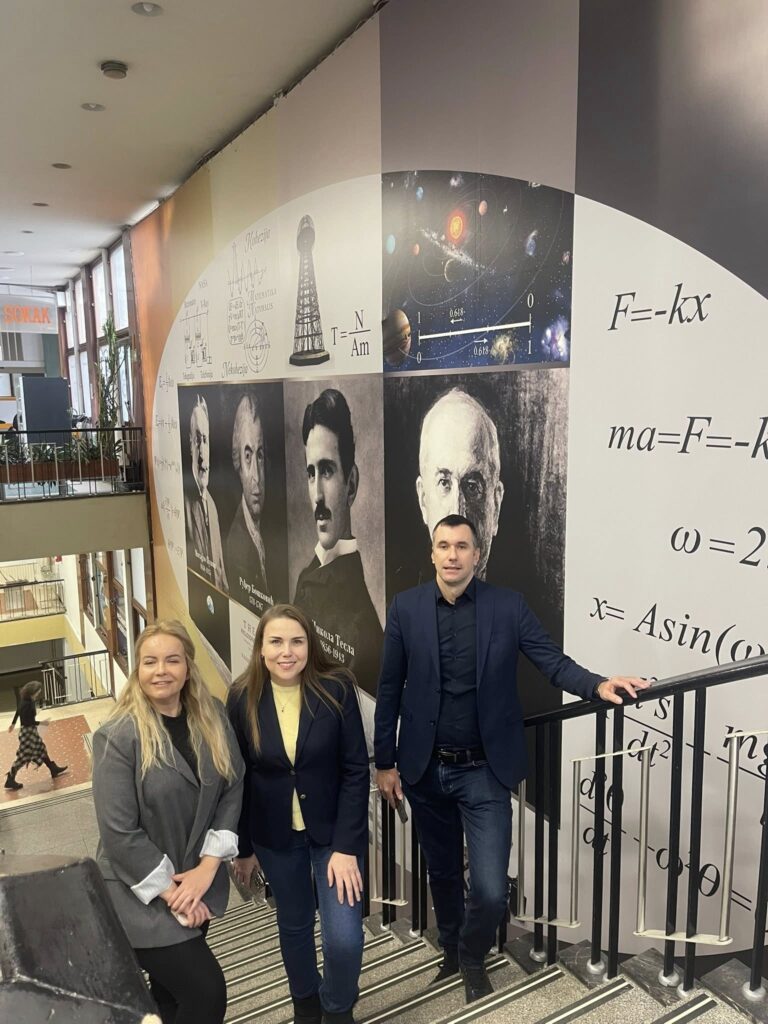
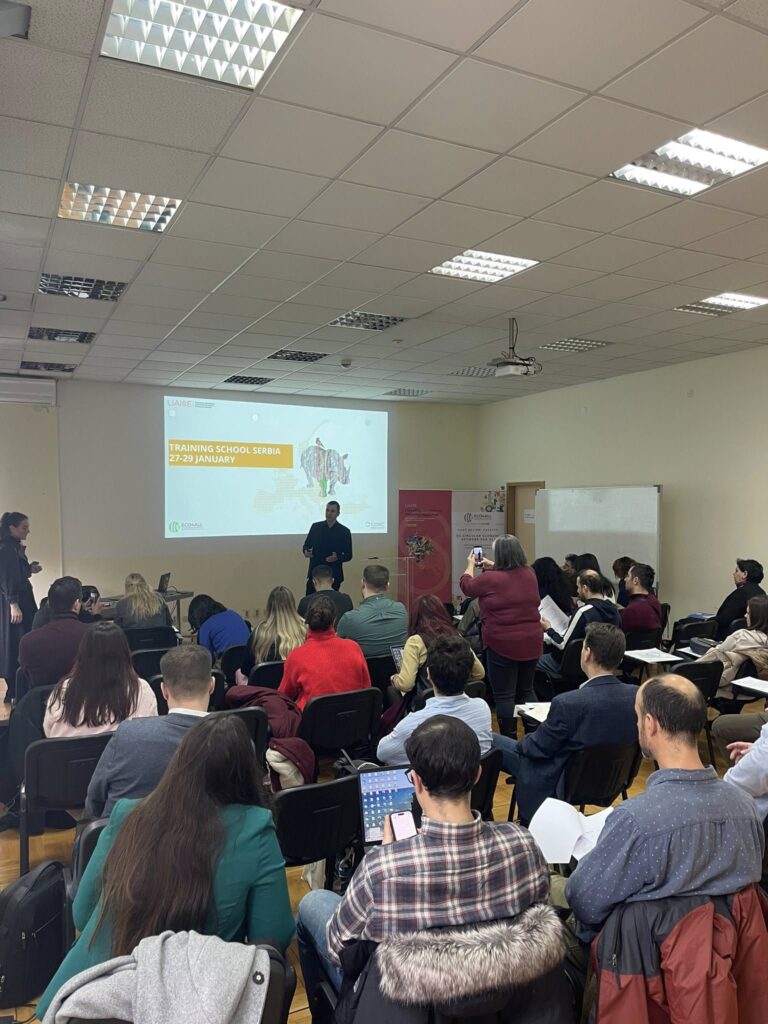
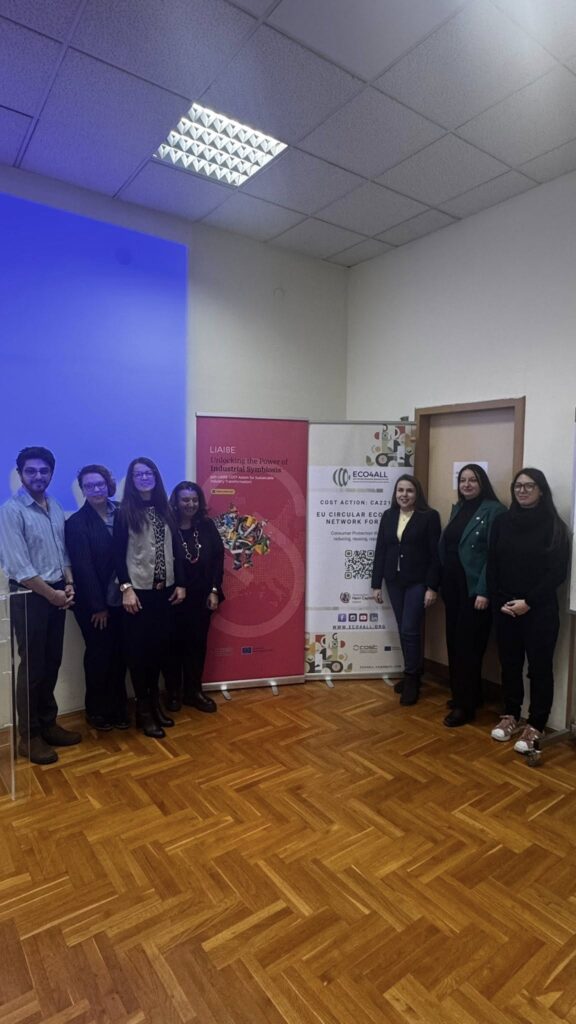
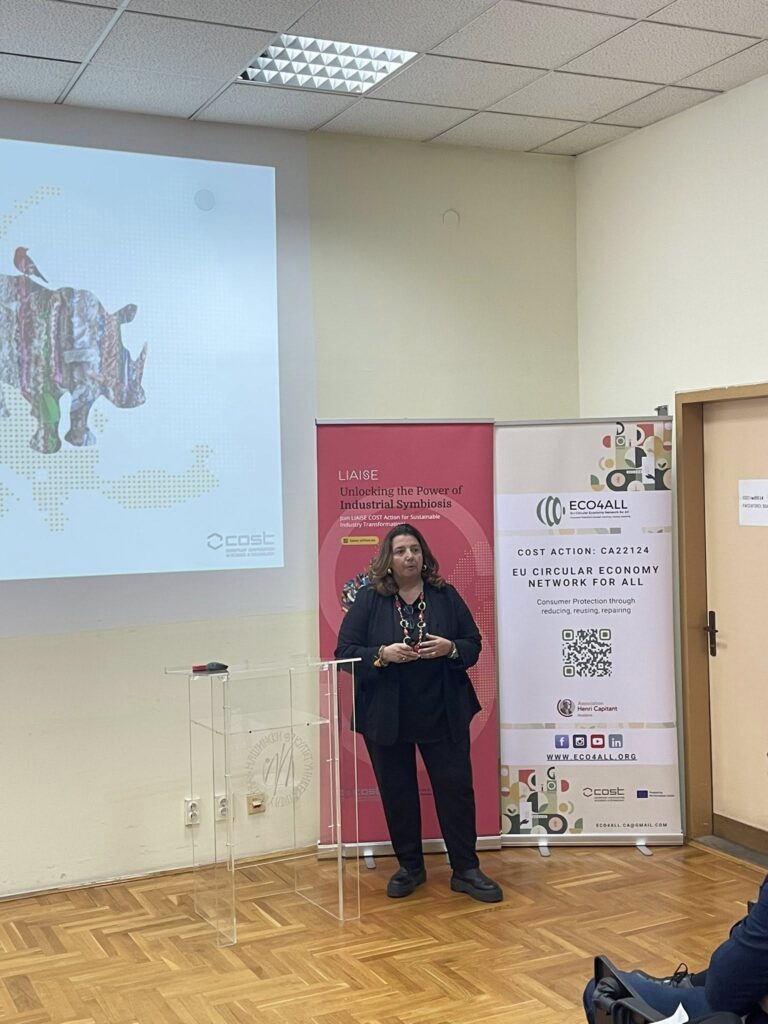
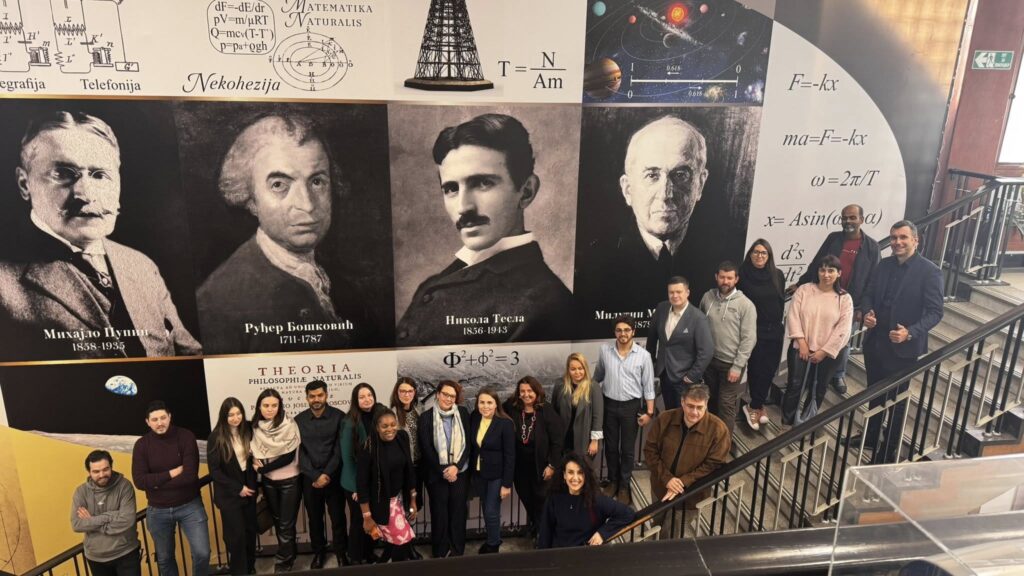
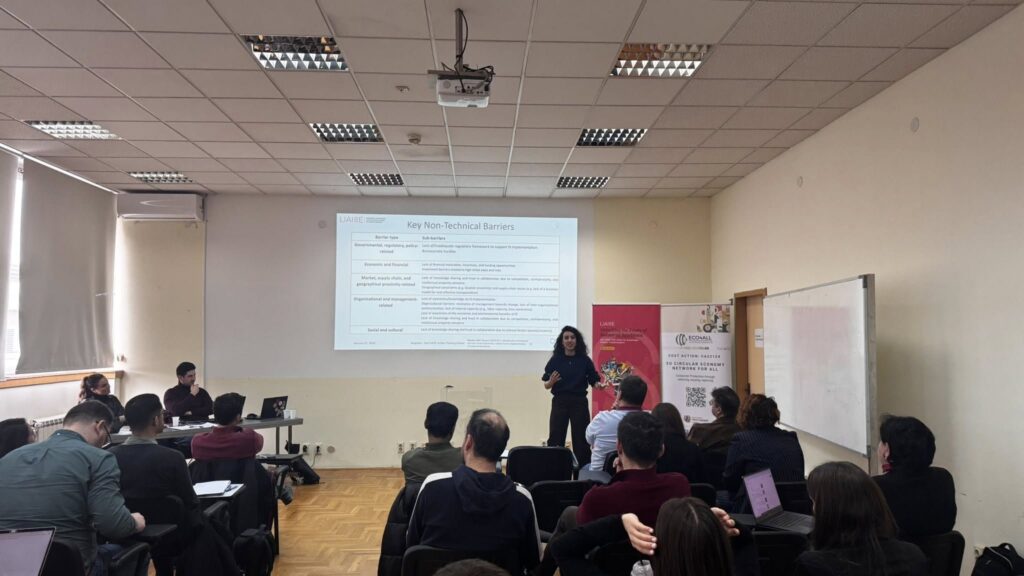
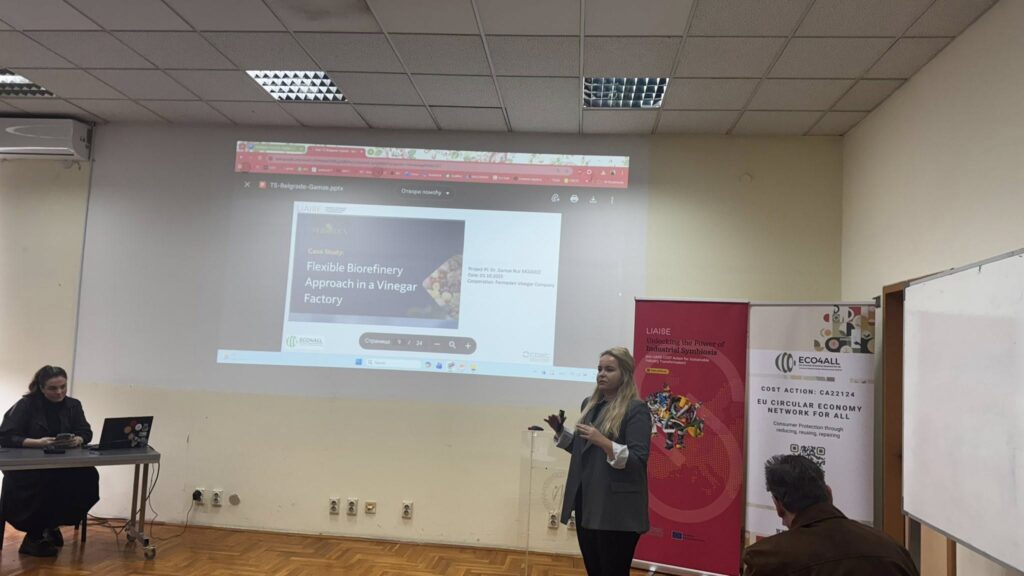
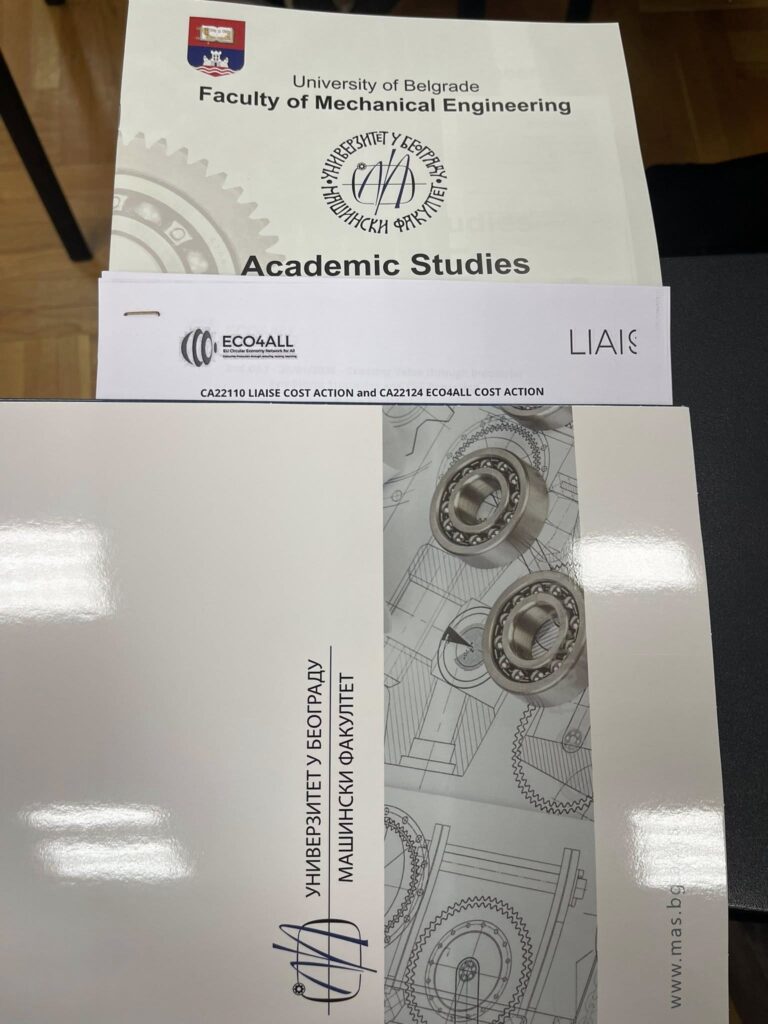
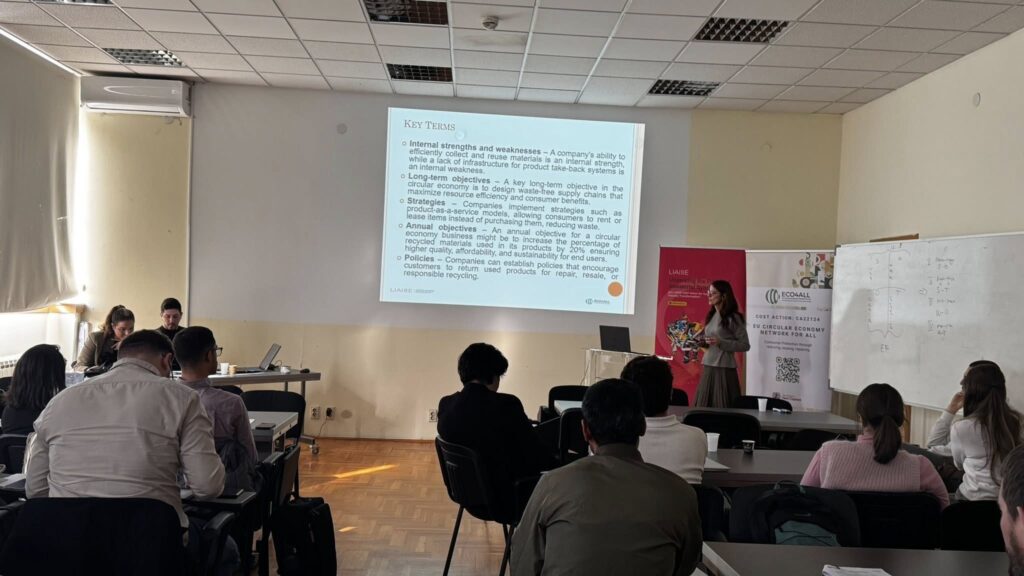
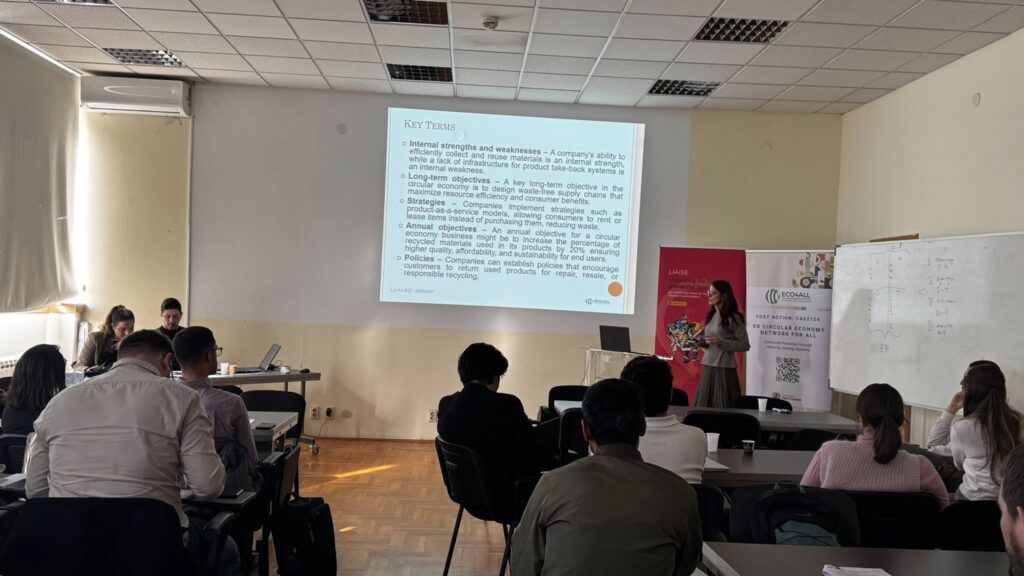
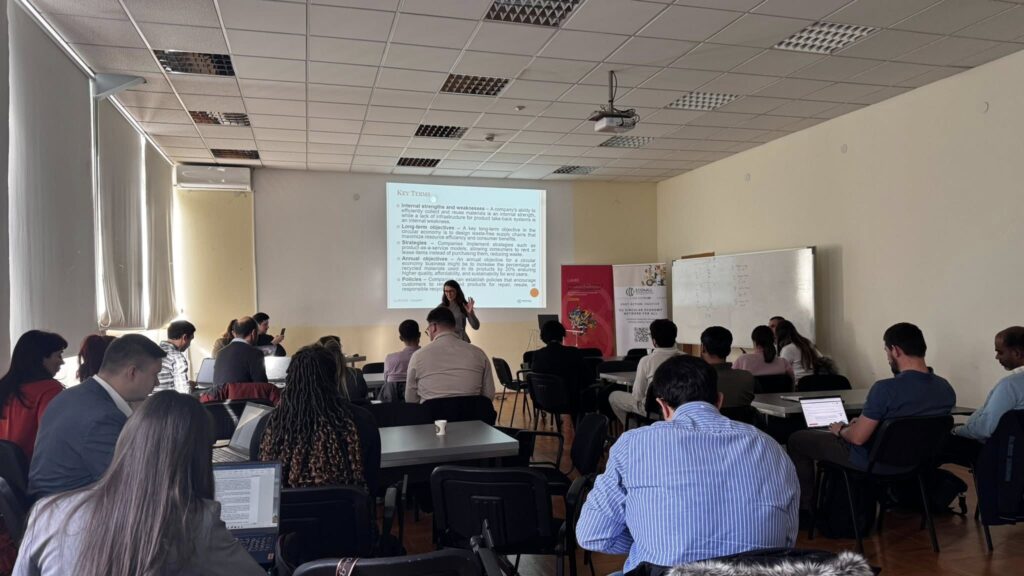
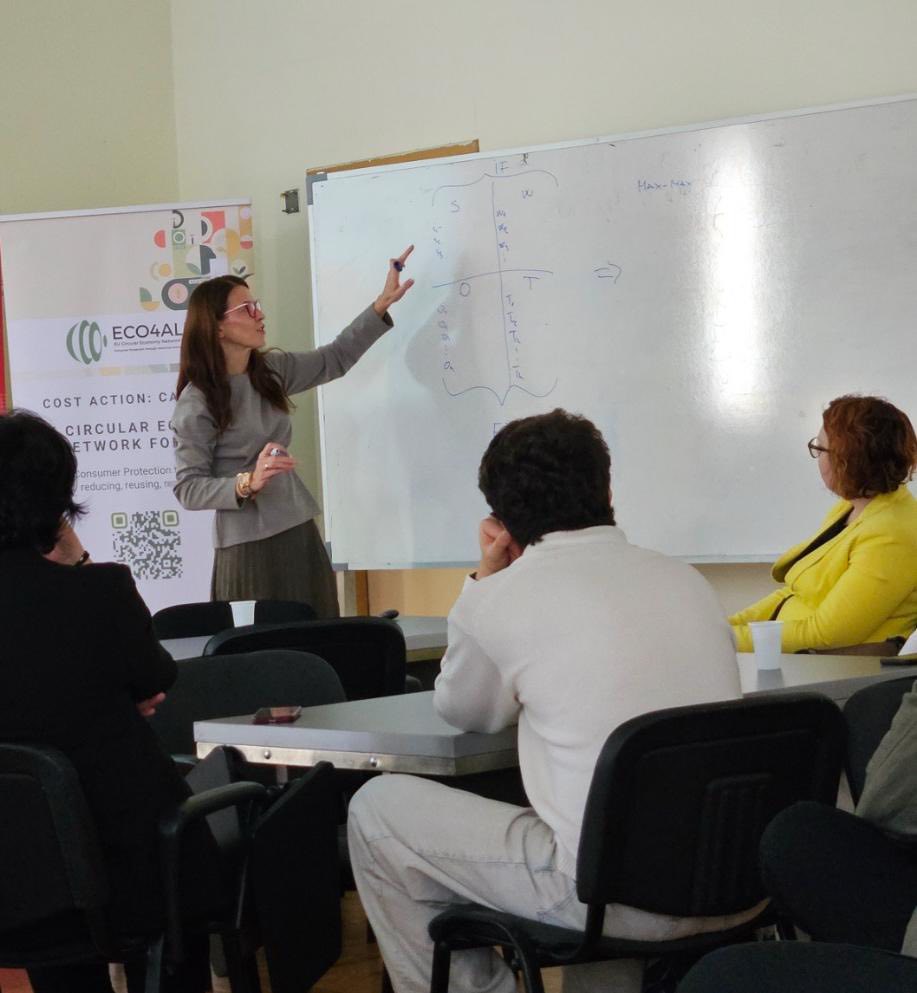
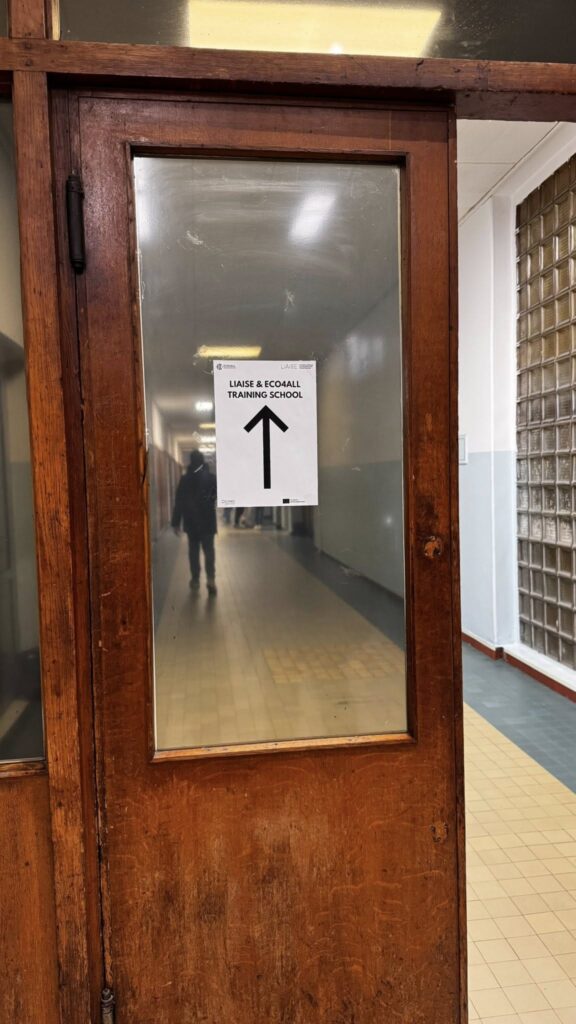
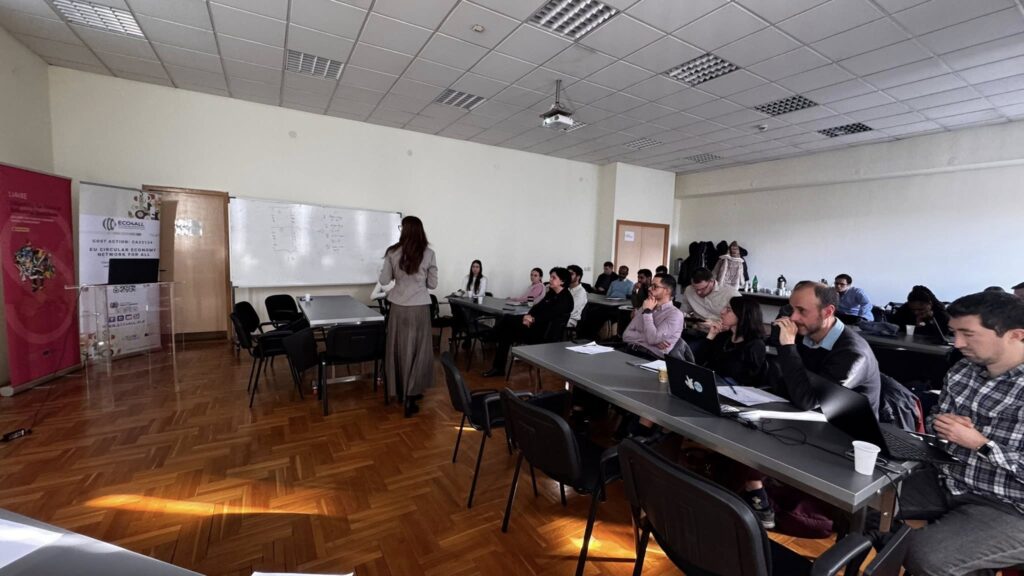
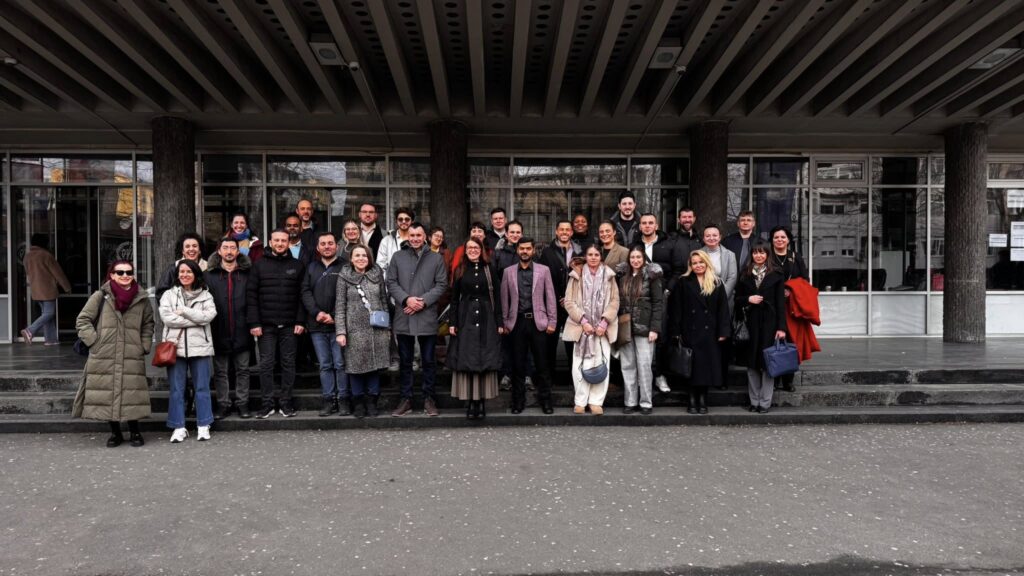
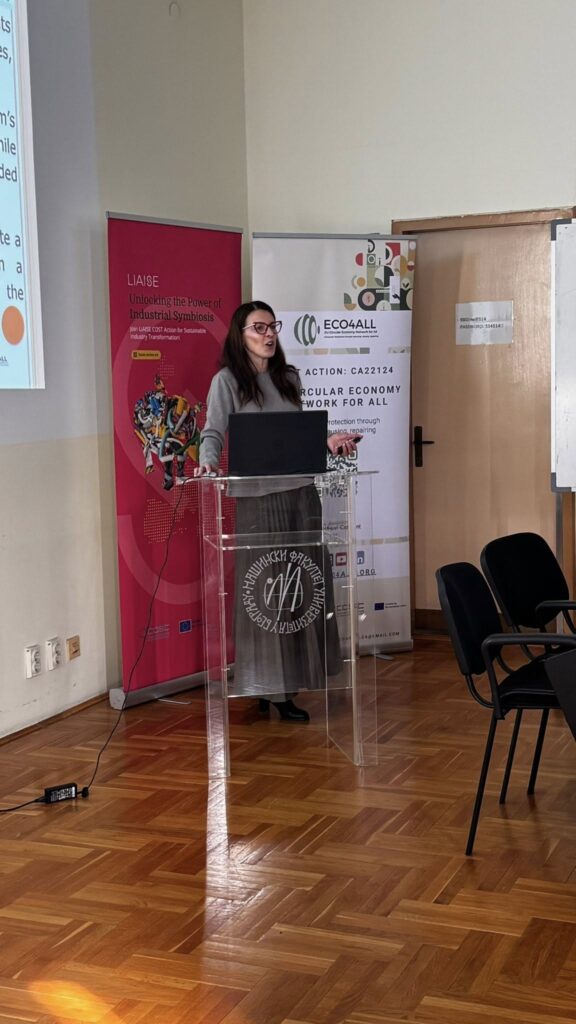
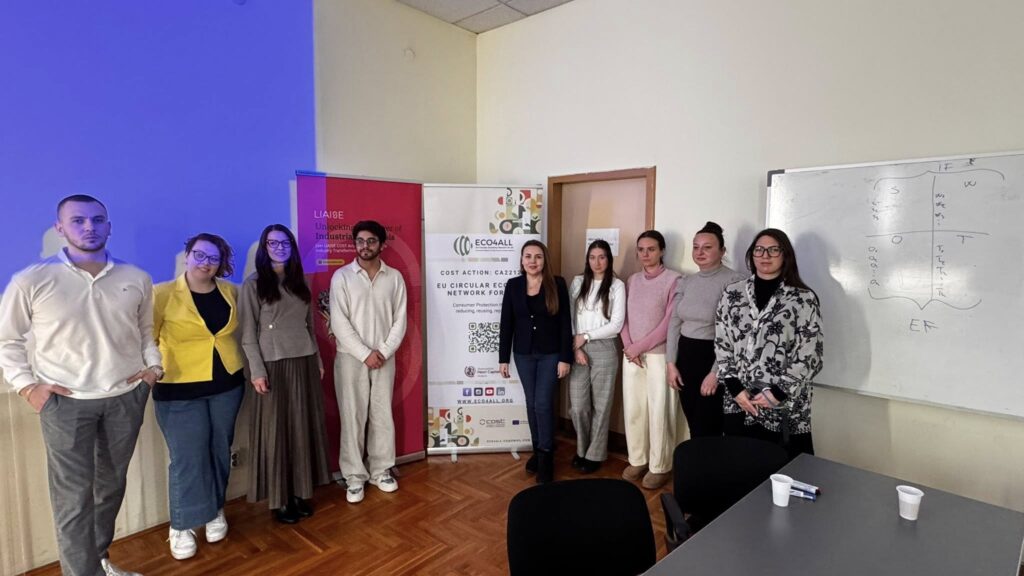
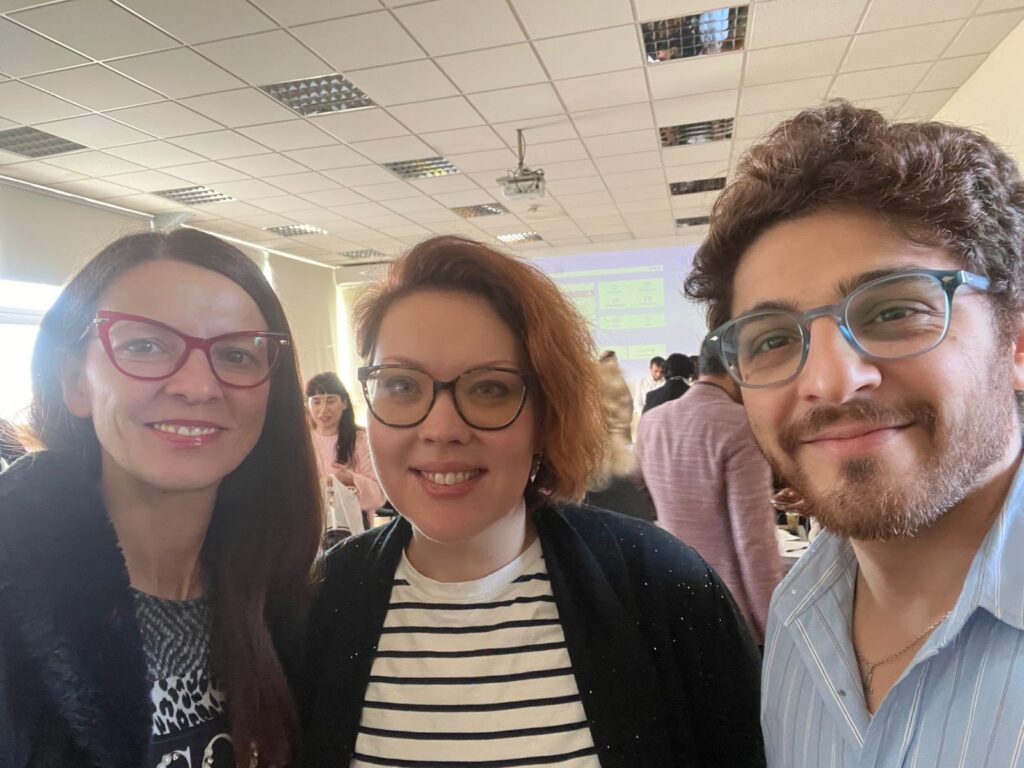
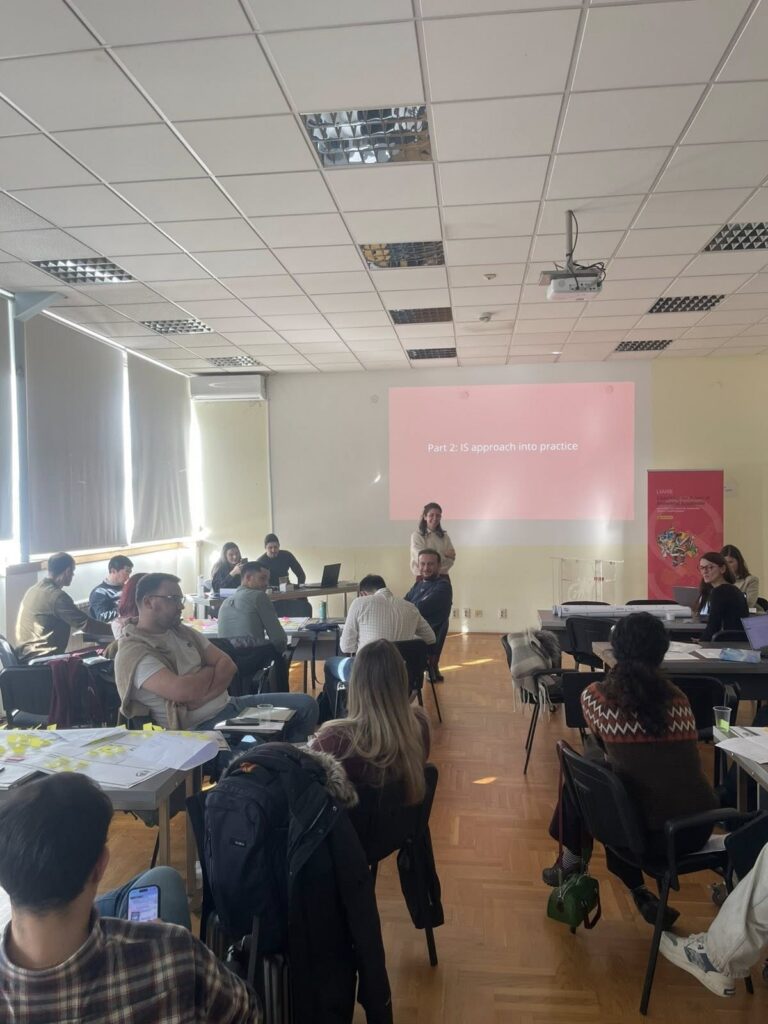
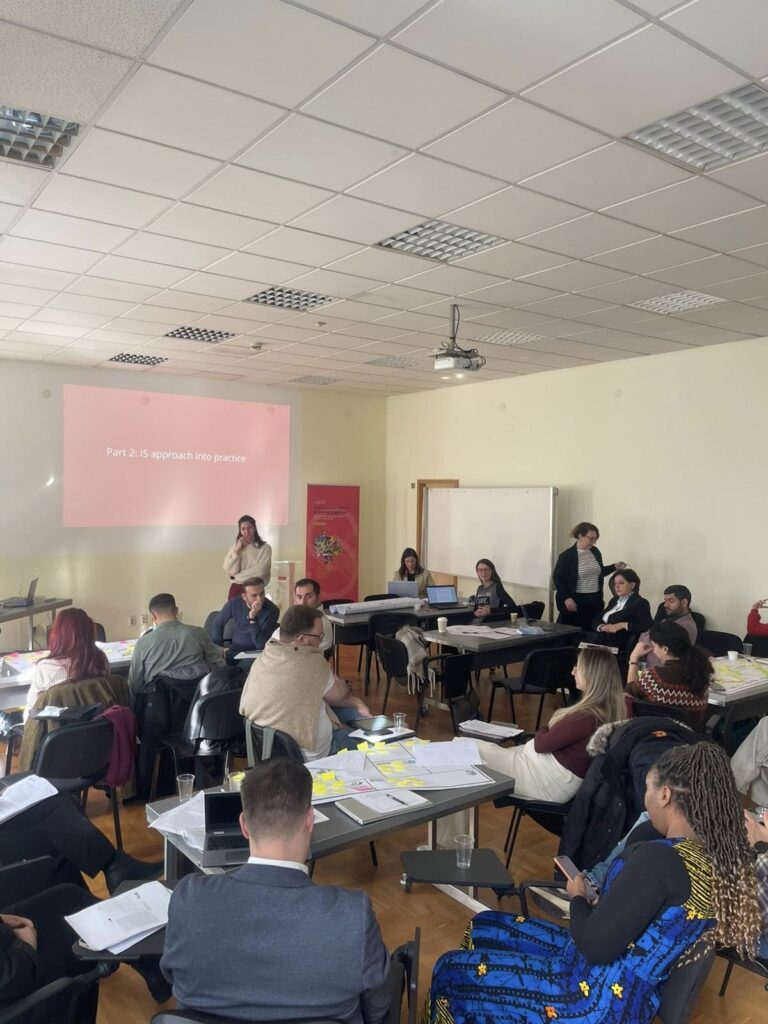
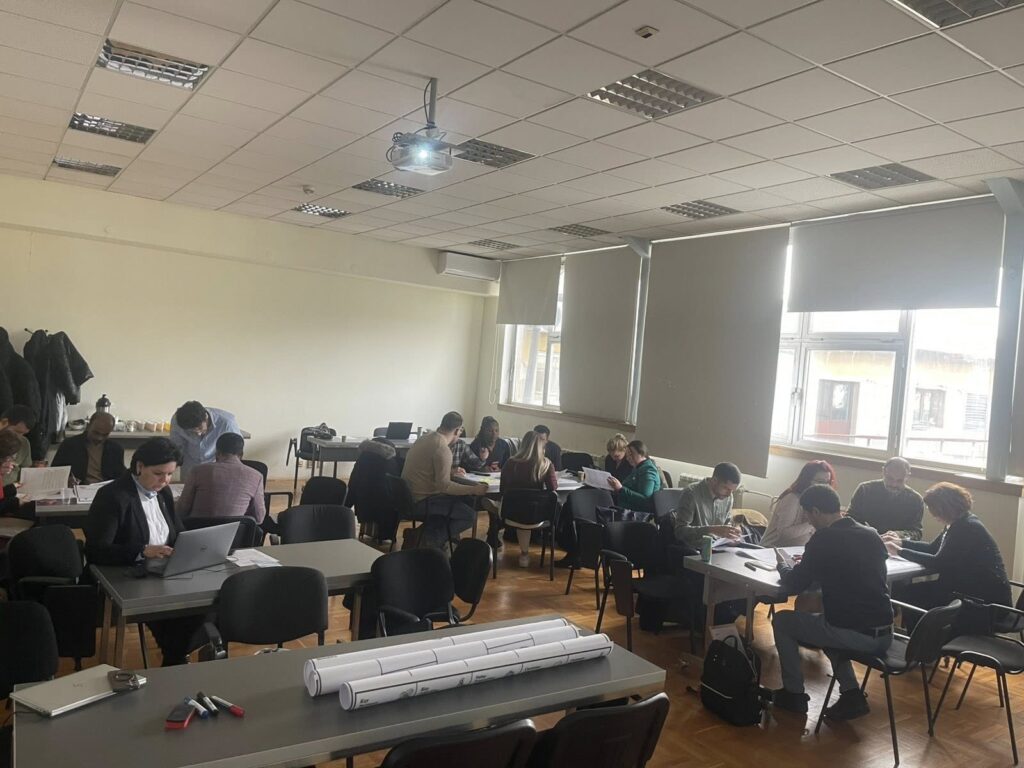
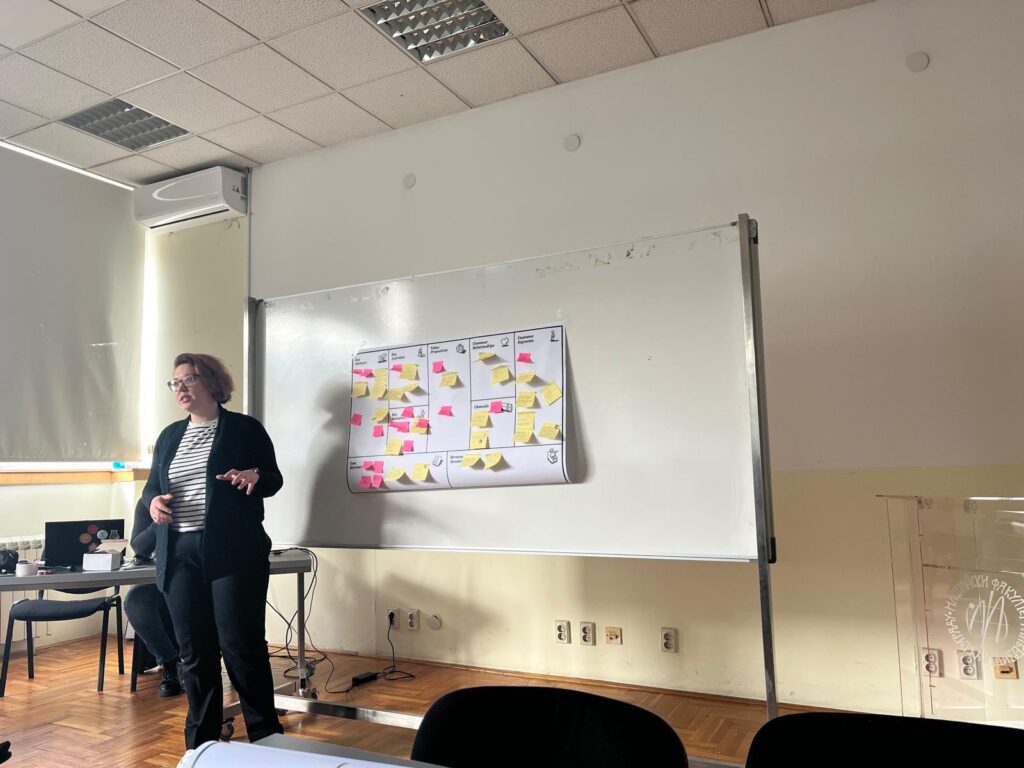
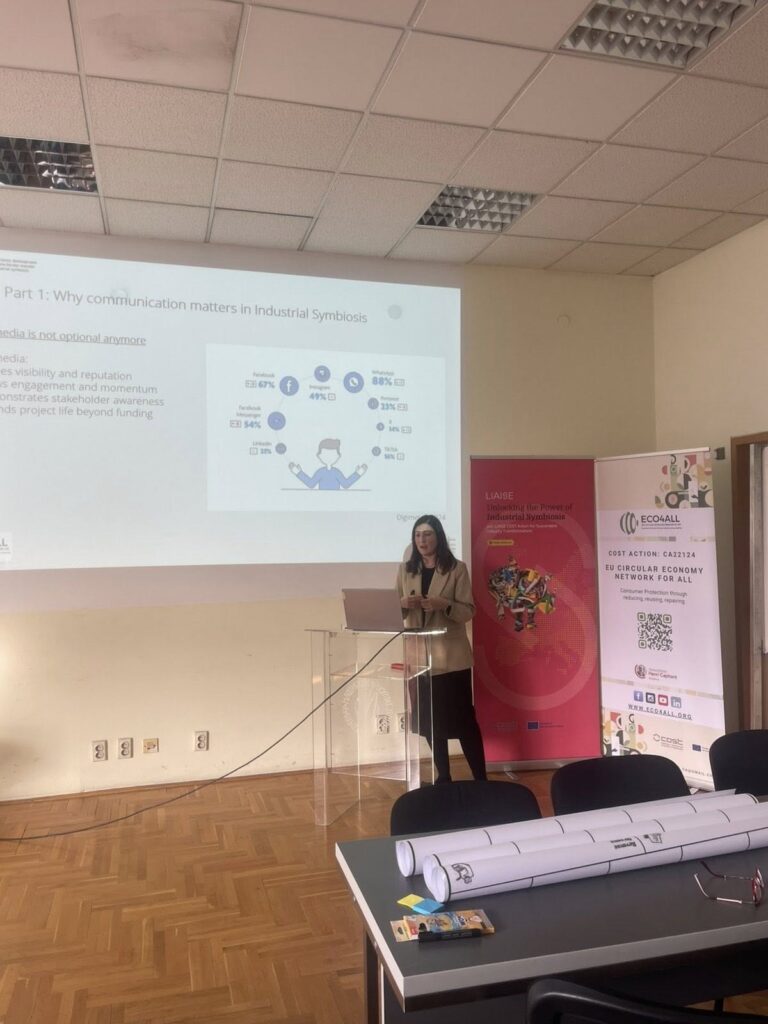
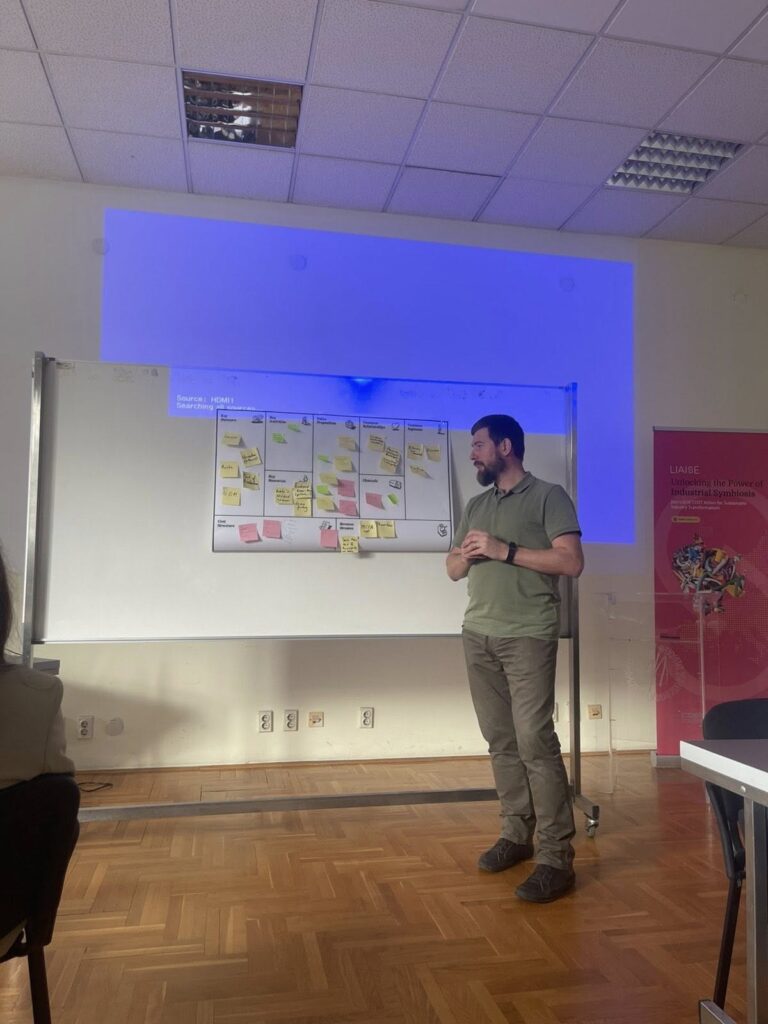
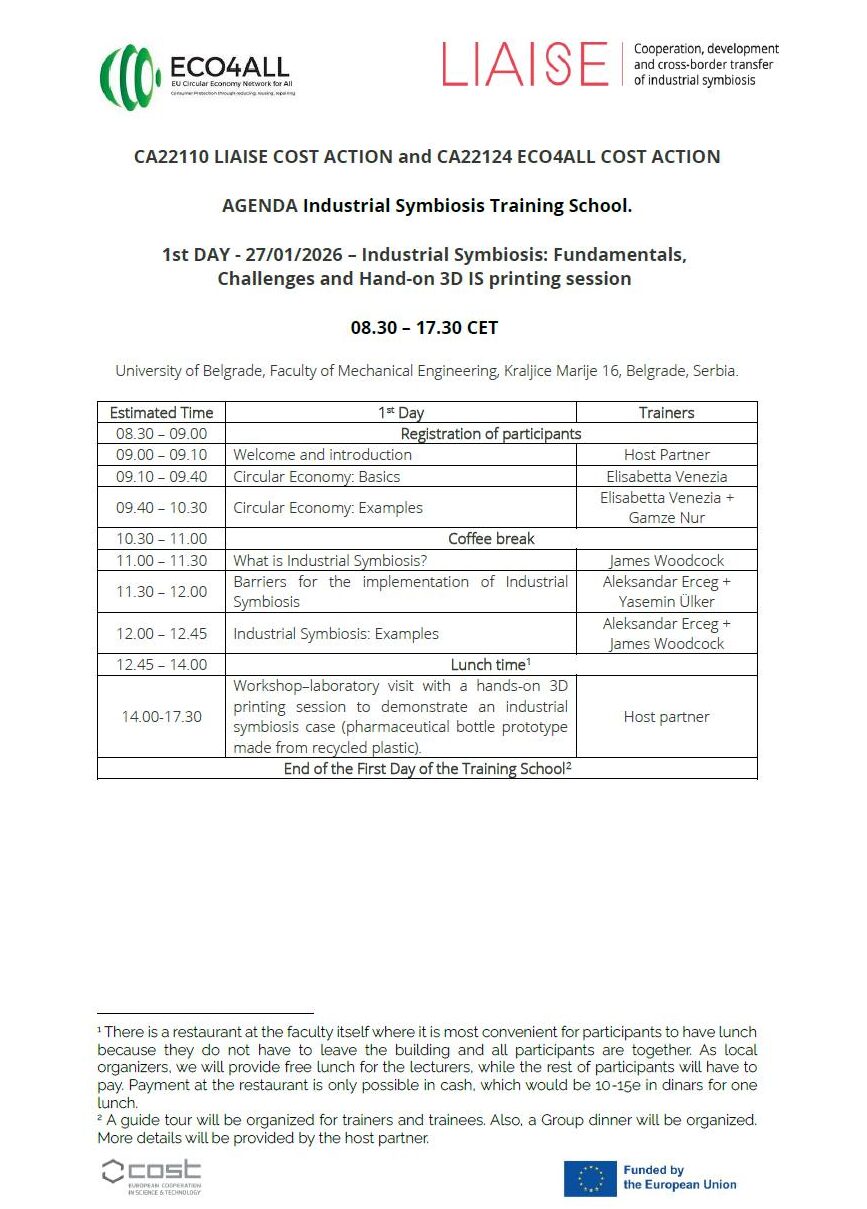
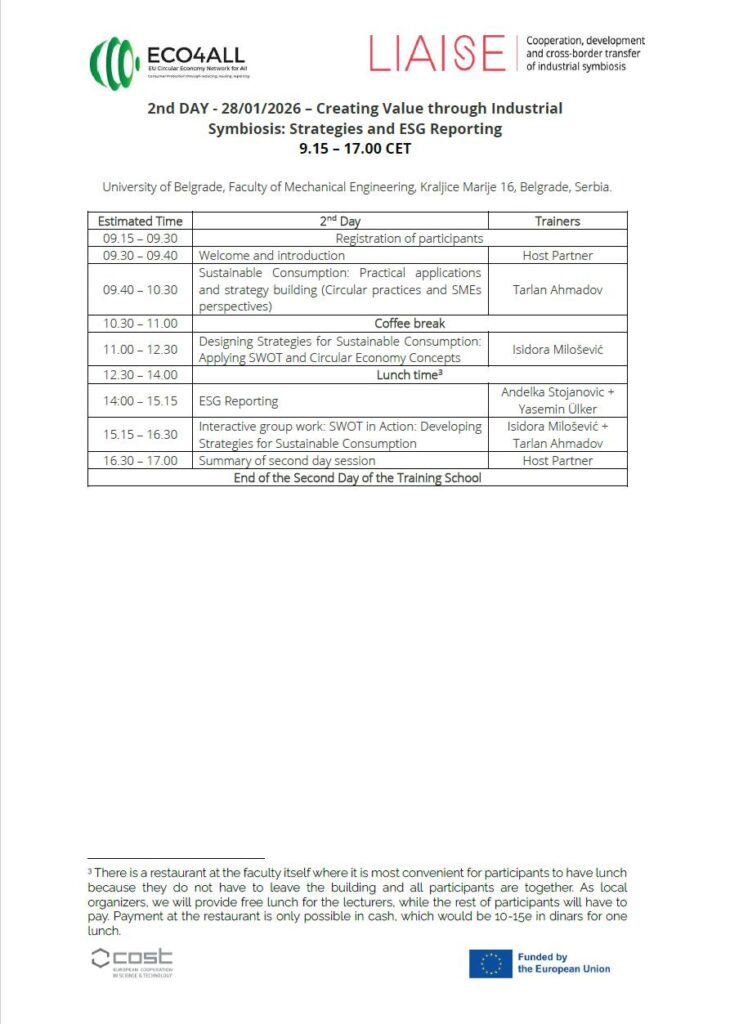
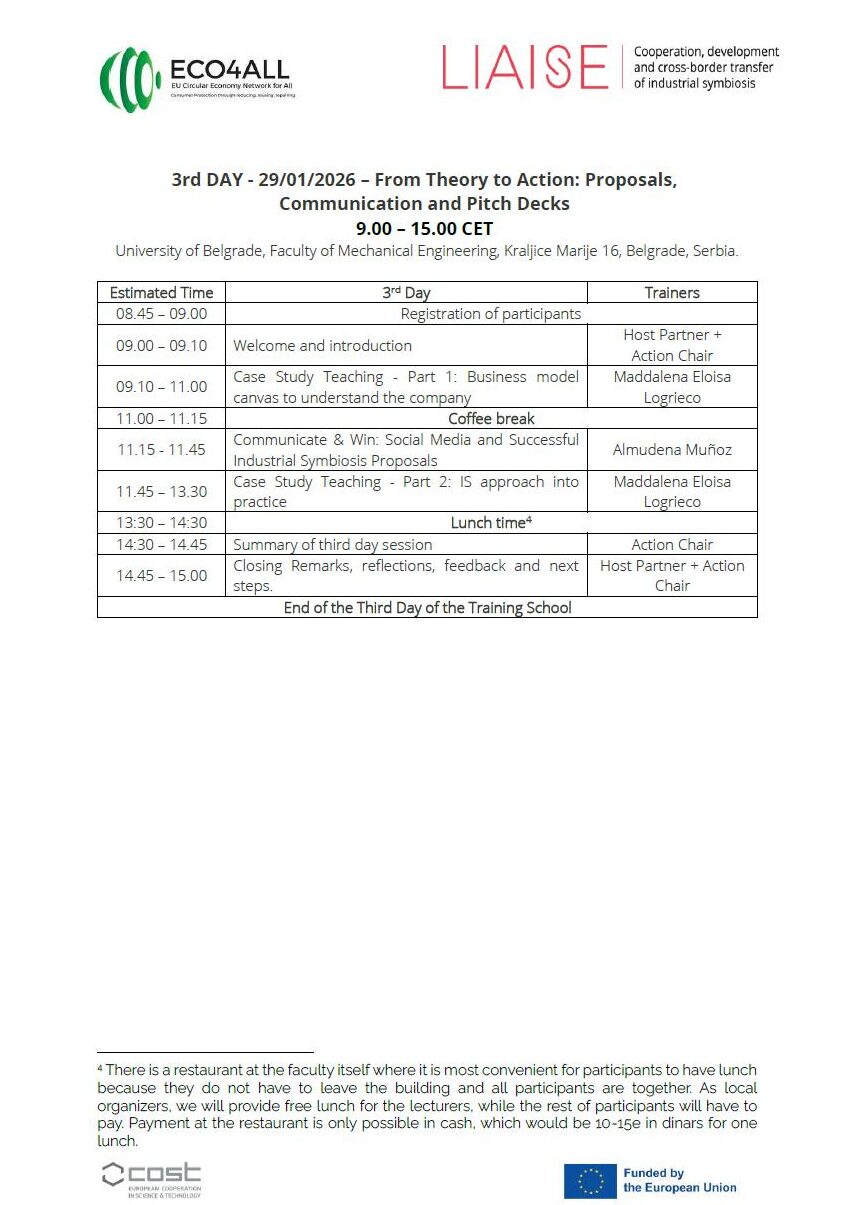
The Industrial Symbiosis Training School (TS) was successfully held from 27 to 29 January 2026 at the University of Belgrade, Faculty of Mechanical Engineering. The three-day event was jointly organised by COST Action CA22110 LIAISE and COST Action CA22124 ECO4ALL, demonstrating a strong synergy between the two Actions and their shared commitment to advancing circular economy principles, industrial symbiosis practices, and cross-border knowledge exchange.
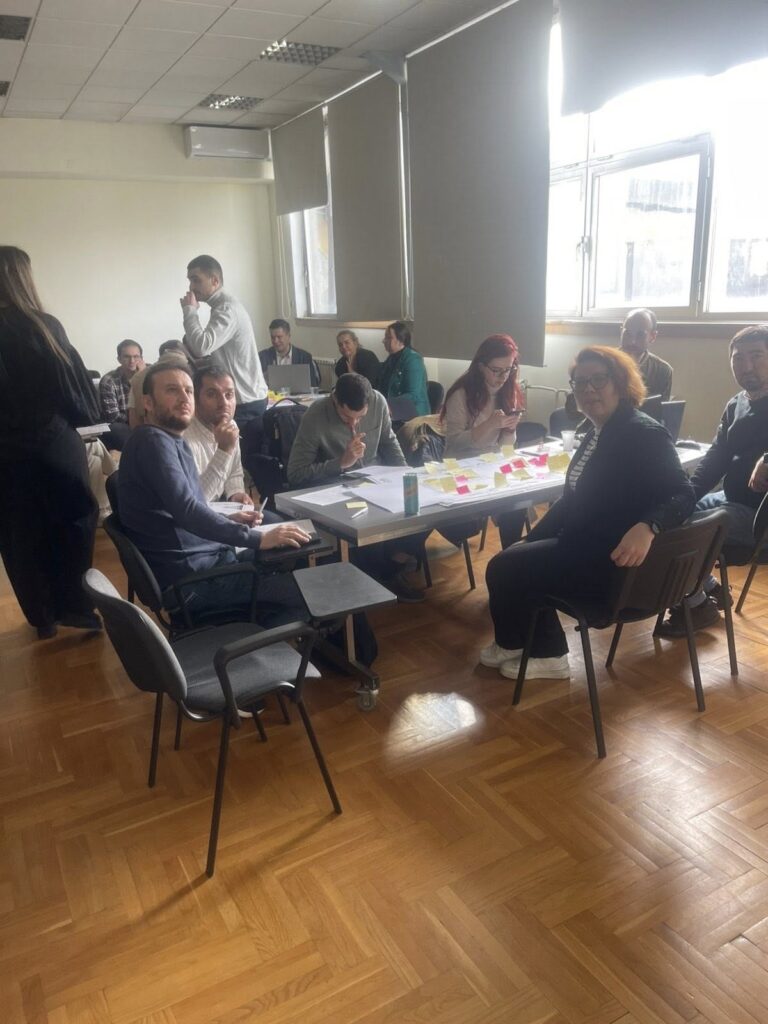
The Training School brought together 25 young researchers, early-career professionals, and students from different countries and disciplinary backgrounds. Designed as an intensive capacity-building activity, the event aimed to bridge theory and practice while fostering interdisciplinary collaboration.
Day 1 – Foundations and Conceptual Framework
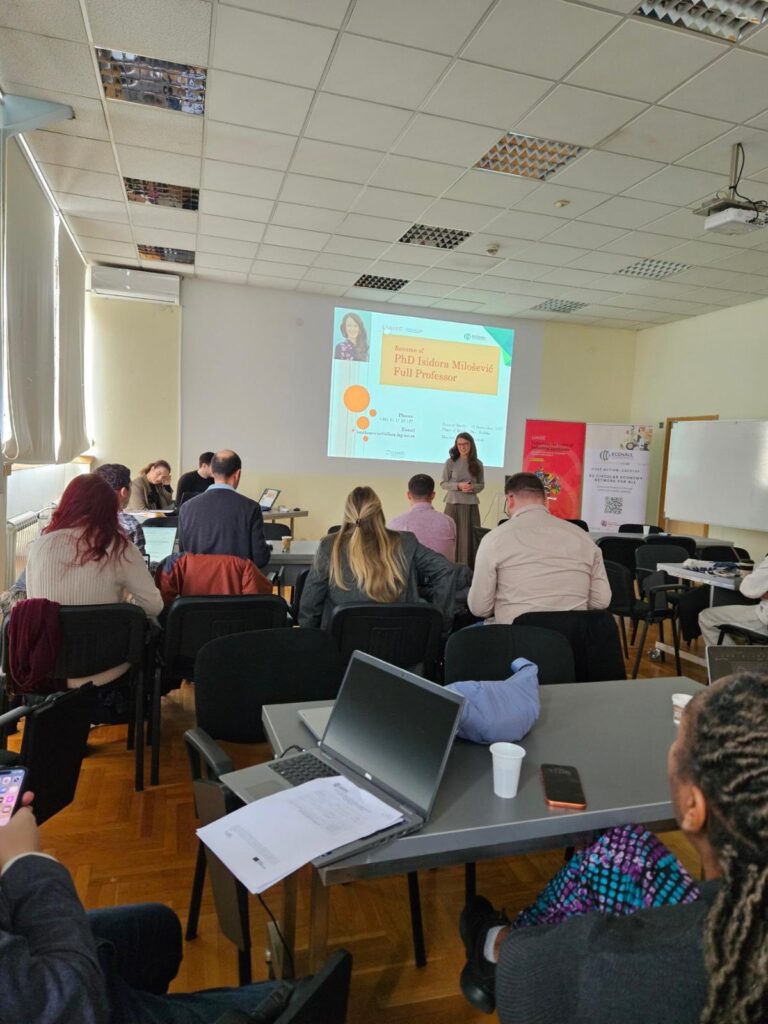
The first day introduced the core principles of Circular Economy and Industrial Symbiosis, addressing theoretical foundations, implementation challenges, and policy dimensions. Interactive discussions allowed participants to critically reflect on the transition from linear to circular systems and the role of behavioural and systemic change.
Day 2 – Applied Knowledge and Case Studies
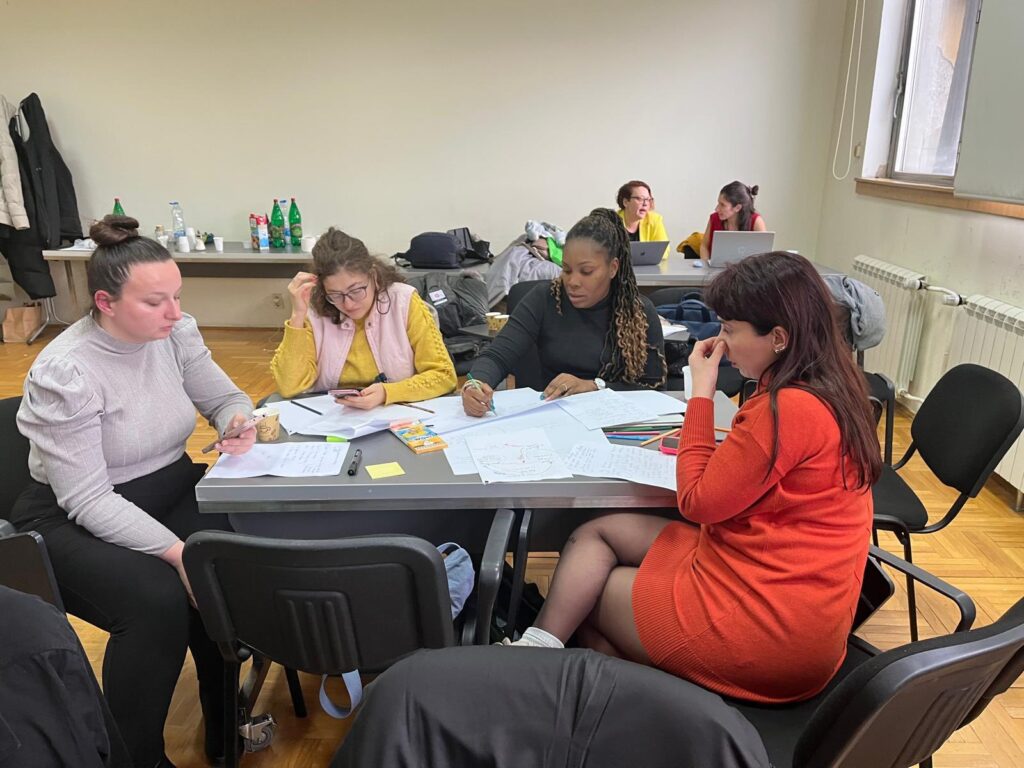
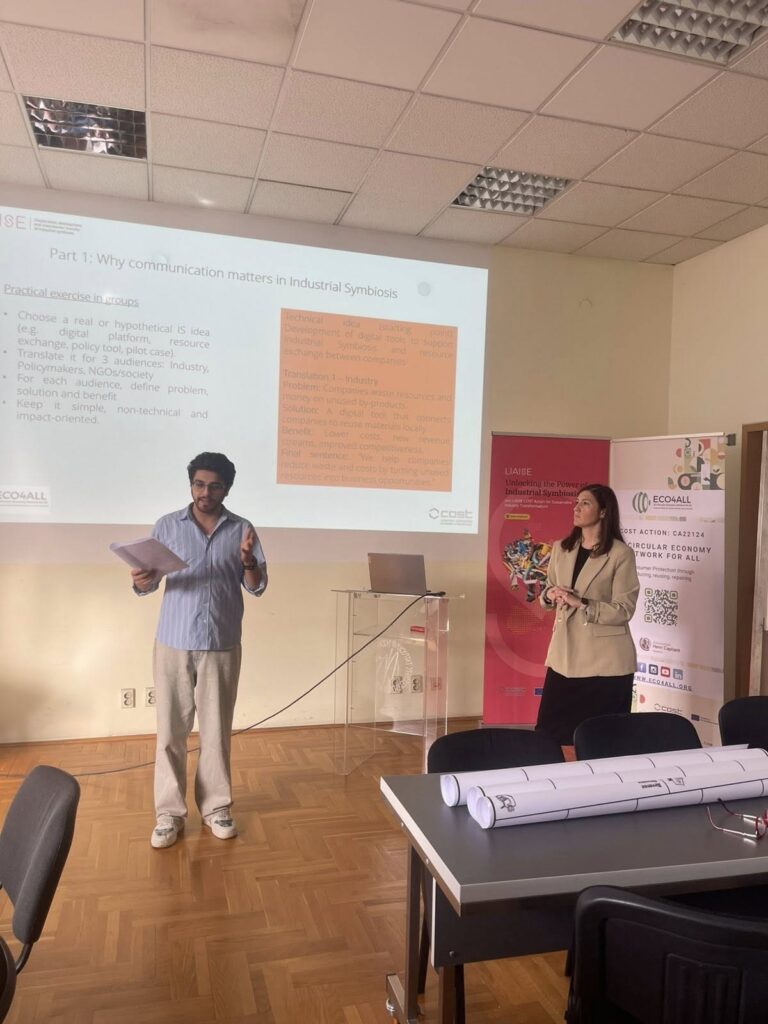
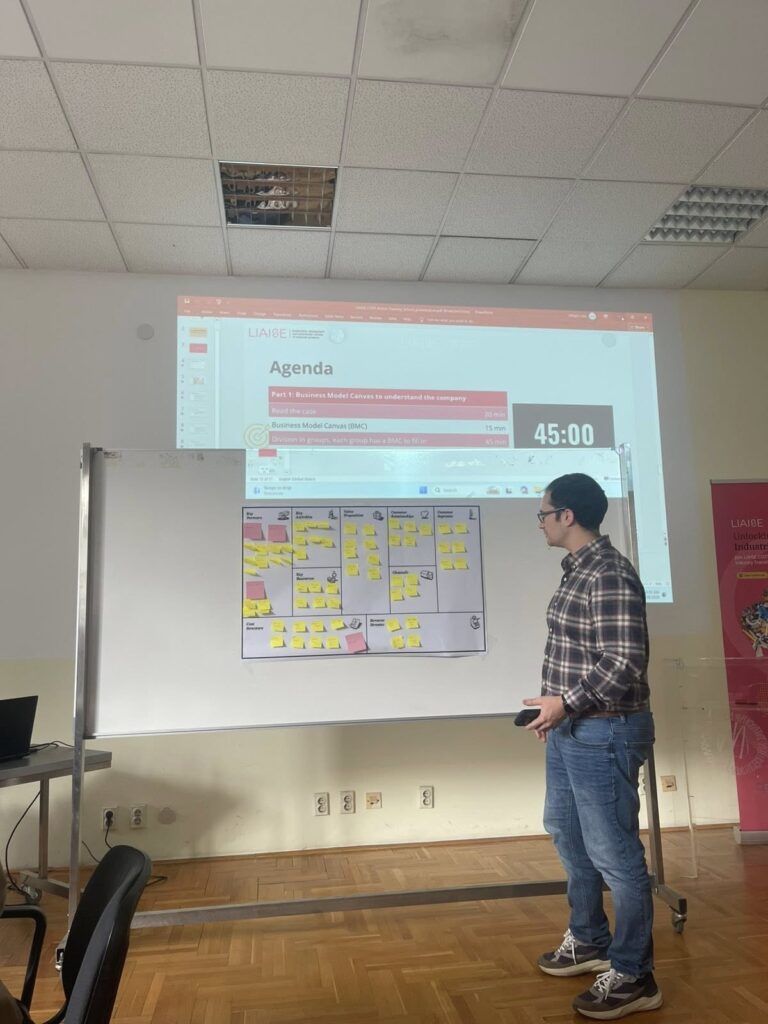
The second day focused on practical implementation. Through real-life case studies, structured group discussions, and collaborative exercises, participants analysed success factors, barriers, and sector-specific opportunities. The sessions strengthened peer learning and encouraged cross-country knowledge exchange.
Day 3 – Hands-on Learning and Future Perspectives
The final day emphasised practical application and synthesis of knowledge. A hands-on 3D printing session demonstrated an industrial symbiosis example through the development of a prototype using recycled plastic. The Training School concluded with reflection sessions and discussions on future research directions and collaboration within and beyond the COST network.
Impact and Contribution to COST Objectives
The Industrial Symbiosis Training School delivered measurable impact at multiple levels:
🔹 Capacity Building
By engaging 25 young participants, the Training School enhanced technical knowledge, practical skills, and interdisciplinary understanding in the field of Industrial Symbiosis and Circular Economy.
🔹 Inclusiveness and International Networking
The event brought together participants from diverse countries and backgrounds, strengthening European research collaboration and promoting knowledge exchange across regions.
🔹 Excellence and Knowledge Transfer
By combining academic expertise with practical demonstrations and applied sessions, the Training School supported the translation of research into practice, reinforcing the scientific excellence of both COST Actions.
🔹 Long-term Network Consolidation
The Training School created new connections among early-career researchers and senior experts, fostering future joint research initiatives, collaborations, and mobility within the COST framework.
The successful delivery of this Training School reflects the strong synergy between LIAISE and ECO4ALL and represents a concrete step toward empowering the next generation of experts committed to advancing sustainable industrial systems and accelerating the transition towards a circular economy.